

Yoga, wellbeing and MPN: a complementary practice supported by emerging evidence
Living with a myeloproliferative neoplasm (MPN) can affect many areas of daily life: energy, sleep, mobility, emotional wellbeing, the relationship with the body and the way people cope with uncertainty. For this reason, the Global MPN continues to develop spaces that support people with MPN in a broader, responsible and patient-centered way.

In the coming months, the Wellbeing Project will launch a new series of activities guided by Marga Linares, a teacher of yoga, meditation, sound therapy and mindfulness, with specific training in restorative yoga and Yoga Nidra. These gentle and adaptable practices may offer a space for pause, body awareness and reconnection for people living with a chronic condition such as MPN.
What does the evidence say about yoga and MPN?
Research on yoga in people with MPN is still limited, but existing studies suggest that yoga may be a useful complementary tool for symptom management. A feasibility study of online yoga in MPN patients showed that this type of intervention could be acceptable and practical, particularly because it can be done at home and adapted to barriers such as fatigue, pain, mobility, transportation or scheduling difficulties.
Pilot studies in MPN have also reported preliminary improvements in total symptom burden, fatigue, anxiety, depression and sleep disturbance.
These findings should be interpreted with caution, as larger and controlled studies are still needed, but they provide a promising basis for continuing to explore yoga as part of supportive care in MPN.
Evidence from the broader field of oncology also supports the use of mind-body practices, including yoga, mindfulness and gentle movement programs, to help with common symptoms experienced by people with cancer, such as fatigue, sleep problems, stress and emotional wellbeing.

Restorative yoga and Yoga Nidra: two paths towards calm
Restorative yoga is a gentle practice that uses supported postures, conscious breathing and physical props to facilitate deep rest in the body. It is not focused on effort or performance, but on creating a safe environment where the nervous system can slow down.
Yoga Nidra, sometimes described as “yogic sleep,” is a guided deep relaxation practice. It is usually practiced lying down and may support mental calm, body awareness and a sense of rest.
For people with MPN, these practices may be especially relevant because they do not require intense physical effort and can be adapted to different levels of energy and mobility. In this sense, yoga is not presented as a single solution, but as one tool within a broader and supported wellbeing approach.
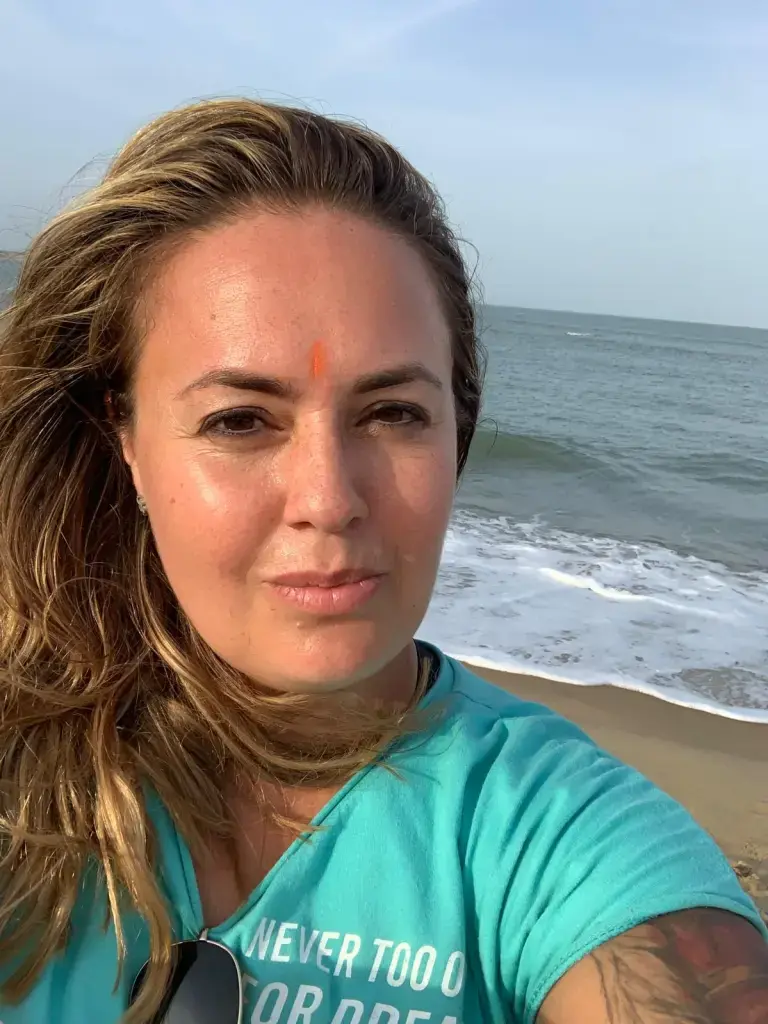
Marga Linares: supporting people through calm
Marga Linares supports wellbeing processes through yoga, meditation, sound therapy and mindfulness. Her work focuses on creating safe, gentle and accessible spaces where each person can reconnect with themselves without pressure or expectations.
In her classes and sessions, Marga integrates restorative yoga, meditation, Yoga Nidra, conscious breathing and sound baths. Her approach aligns with the philosophy of the Wellbeing Project: to offer resources that may help people live with more calm, presence and care.
Listening to the body: spleen, kidneys and liver
In some people with MPN, organs such as the spleen, liver or kidneys may be involved or closely monitored as part of medical follow-up, depending on the type of disease, clinical evolution, treatments and individual patient characteristics.
From the perspective of yoga practice, attention can be brought to the body, breathing, relaxation and gentle movements focused on areas related to these organs. This should not be understood as a direct treatment for the spleen, kidneys or liver, nor as an alternative to medical care.

Its value lies in offering a way to reconnect with the body, listen to its signals, reduce tension, support calm and accompany daily self-care.
Every patient is different. Any physical or wellbeing practice should be adapted to the individual situation and, when in doubt, discussed with the healthcare team.
Upcoming Wellbeing Project activities with Marga Linares
Over the coming months, Global MPN will offer a series of activities focused on wellbeing, body awareness and self-care, guided by Marga Linares.
September 12, 2026 · In-person meeting in Barcelona | September 19, 2026 · Online yoga masterclass | September 24, 2026 · 21-day challenge “Back to Yourself” |
On September 12, 2026, we will hold an in-person meeting in Barcelona, from 12:00 PM to 6:00 PM. It will be a day to meet, share and experience different wellbeing activities. One of the sessions will be a Sound Bath, a deep relaxation practice based on the vibration of instruments such as bowls, gong and other sound elements. | On September 19, 2026, Marga Linares will guide an online yoga masterclass. Time: 20:00, Spain time. This session will offer a practical introduction to yoga from a gentle, conscious and adaptable perspective. | On September 24, 2026, we will begin the 21-day challenge “Back to Yourself.” This challenge is designed to create a daily space for pause, breathing and reconnection with oneself. It is an invitation to return to the body with kindness and to build a simple, sustainable and realistic practice. |
October 19, 2026 · 21-day challenge focused on the kidneys | November 23, 2026 · 21-day challenge focused on the spleen | January 11, 2027 · 21-day challenge focused on the liver |
On October 19, 2026, we will begin a 21-day challenge focused on activating, supporting and caring for the kidney channel, from a yoga, breathing and body-awareness perspective. | On November 23, 2026, we will begin a 21-day challenge focused on activating, supporting and caring for the spleen channel, through gentle and adapted practices. | On January 11, 2027, we will begin a new 21-day challenge dedicated to activating, supporting and caring for the liver channel, integrating conscious movement, breathing and relaxation. |
A complementary practice, not a substitute for medical care
At Global MPN, we want to emphasize that yoga, meditation, Yoga Nidra and sound baths do not replace medical follow-up, hematology appointments or treatments prescribed by specialists.
Their role is complementary. They may help create spaces of calm, improve the relationship with the body, support rest and accompany emotional wellbeing, but they should always be integrated into responsible care adapted to each person.
The aim of the Wellbeing Project is to offer tools that support, accompany and help patients feel more informed, more present and more connected to their own process.
Stay connected with the international community
If you would like to continue learning and connecting with others living with MPN, we invite you to explore the initiatives of Global MPN.
📰 Subscribe to our newsletter to receive updates about research, webinars and community resources.
📝 Register for MPN Journal, a free tool created by patients for patients to track symptoms, treatments and experiences. https://mpn-journal.com
🌿 Explore the Wellbeing Project and discover activities designed to support quality of life. https://www.gmpnsf.org/wellbeing-project
Together, we can help make reliable information more accessible to people living with MPN and their families.


Comments